I first discovered Charles de Lint by accident; I was in my twenties and browsing the young adult section of a Barnes and Noble when I found a book titled The Blue Girl. I thought it sounded interesting, so I bought it and brought it home—and found myself transported to the vivid and wonderfully inclusive universe of Newford, where myths waken to life.
Somehow, despite being an avid reader since I first acquired the skill of deciphering letters and regularly haunting the speculative fiction shelves of bookstores and libraries, I had missed certain authors whose work would later come to define the true heart of fantasy for me. Charles was one of those authors. His body of stories, for which he coined the term “mythic fiction” while on a ramble with his good friend, editor Terri Windling, showed me new prospects for the act and purpose of storytelling. I’d previously grown up reading books that rarely featured characters who looked like me or drew on the stories of my heritage—at least not in a manner that wasn’t hurtful or demeaning. Though I loved and reread those books and still hold many of them dear to this day, as I grew older, it became apparent that not only had I never been their target audience, but they simply had no place for me, and that realization hurt my heart.
Yet through their contributions to the field, Charles and his contemporaries suggested otherwise. Myths and folklore are intrinsic to every culture, as demonstrated by Newford with its tricksters, its Jilly Coppercorns, its artistic community at large. They are the lens through which we view and define our world, making it vital that we expand that lens to its fullest, most global capacity. Charles understood that fact and populated his fictional universe to reflect it. To open doors to everyone.
The more I read of his words, the more a fire began to burn inside me, one that demanded I add my voice to the literary conversation in the form of the representation I’d been craving. If we can have trolls and faeries in our fantasy, why not nagas and apsaras? If we can retell Greek and Norse mythology, why not Hindu stories? Shinto? Hmong? So I did—devoting my career as an author thus far to rectifying that lack of Hindu/desi mythic fiction in the North American market.
In recent months, as I read back through Charles’s bibliography to reacquaint myself with Newford and the numerous beings who pass through there, it occurred to me again just how much his books invited me to write my own. I’m deeply grateful and hope to welcome other new authors of varied backgrounds in turn.
Thank you, Charles, for helping to lead the way through the thorny forest between the mundane and the realms of possibility beyond.
© Shveta Thakrar
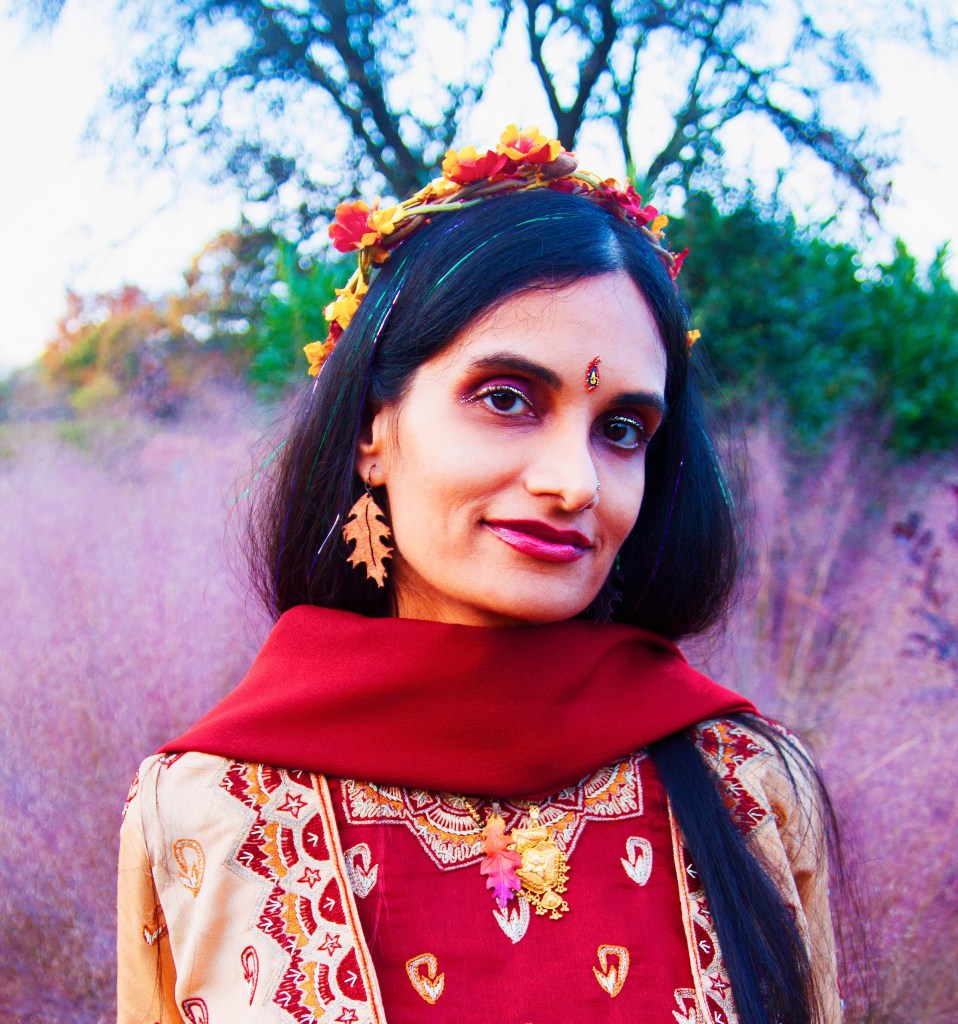
Shveta Thakrar is a part-time nagini and full-time believer in magic. Her work has appeared in a number of magazines and anthologies, including Enchanted Living, Uncanny Magazine, A Thousand Beginnings and Endings, and Toil & Trouble. Her debut young adult fantasy novel, Star Daughter, was a finalist for the 2021 Andre Norton Nebula Award, and her second and third novels, The Dream Runners and the forthcoming Divining the Leaves, take place in the same universe. Her adult fantasy novella, Into the Moon Garden, is available as an original audiobook from Audible. When not spinning stories about spider silk and shadows, magic and marauders, and courageous girls illuminated by dancing rainbow flames, Shveta crafts, devours books, daydreams, travels, bakes, and occasionally even plays her harp.
 Celebrating CdL