Contemporary? Historical?
Nope. Moonheart didn’t blow me away when it first came out forty years ago for the simple reason that I didn’t read it then. At that time, I was in graduate school with no money to spare for new books. (I even took most of the class reading material out of the university library.) Even if I’d had the money, I didn’t have much time to spare. So, I’m coming at this anniversary celebration from a different perspective, but one that still makes me very happy to celebrate Moonheart, Riddle of the Wren, and the remarkable writer who is Charles de Lint.
To me, what’s remarkable isn’t that 2024 celebrates the fortieth anniversary of the publication of both Moonheart and Riddle of the Wren; it’s that forty years after these book were released, each one remains fresh and vital. As an imaginary world fantasy, Riddle of the Wren has fewer hurdles to leap over. De Lint’s prose, elegant, yet never stiff or stilted or out of touch with the humanity of his characters, carries this Celtic-seasoned quest fantasy effortlessly along.
Moonheart faces a much greater challenge. Contemporary when it was written, Moonheart nonetheless manages to remain ageless, even while remaining firmly rooted in the time period in which it was written.
I can speak to this point from experience. As I mentioned above, I wasn’t among those who read Moonheart when it was first released. Best as I can estimate, I probably read it a mere twenty or so years ago, so it was already drifting into the realm of historical fantasy even then.
The first time I read Moonheart, I was struck by the period details. I’d had Danskin skirts, just like those Sara wears. As someone who’d worked on “cutting edge” computers of the time, I had my suspicions about Memoria long before the novel reveals that computer’s special role. I appreciated how skillfully de Lint blended classic (for that time) police procedurals with the multiple mystic elements of the Other Worlds. And I was impressed how the story remained fresh and bright, even though by then I’d read a lot of urban fantasy—including many of de Lint’s own works.
To this point in my essay, since I’ve been talking about an author and his works, I’ve referred to him by his surname, donning my long ago English Professor hat. However, I’d also like to talk about Charles, who I’m happy to feel is a friend. I first met Charles when he did a book event in Albuquerque for Someplace to be Flying. He’d written a very strong review for Donnerjack, one of the novels I’d completed for Roger Zelazny. Someone (maybe my editor?) suggested I might want to ask him to take a look at my forthcoming novel, Changer.
I did, although I was scared out of my mind at the idea of speaking to this somber, self-contained man who radiated “distinguished author” from every pore. But when I stumbled through my request, Charles was very kind. He had me give MaryAnn my name and information and a reminder, so he’d be certain not to overlook the book when the ARC arrived. And he didn’t…
After that, we started crossing paths at World Fantasy conventions. Formal and respectful, I always addressed him as Mr. de Lint, until he said, “Charles. I’m Charles.” One of my more memorable panels occurred the year Charles was WFC Guest of Honor. I was moderator for a panel on some aspect of urban fantasy. Two of my panelists were Charles and Terri (Windling). Those formal manners of mine I mentioned above meant that I offered Guest of Honor Charles first chance at every question, until he looked at me with (feigned, I think, I hope) pathos and said, “Why do I always have to go first?” I muttered something about him being Guest of Honor, then let the ebullient Josepha Sherman have first go. Then, as if this wasn’t enough, Charles and Terri highjacked to panel to talk about my novel, Changer, since, as a proper moderator, I had been facilitating the panelists’ discussion, not talking about my own work. A friend who was in the audience later reported with evil glee that I had blushed right up to the tops of my ears.
During the years we regularly attended WFC, Jim often played bridge with editor John Douglas. One year, to avoid being roped into the game, (I am terrible at bridge), I slipped away to watch the informal music sessions that Charles and MaryAnn were hosting. That’s when I learned that Charles could and would raise his voice in song.
Despite me being in awe of them both, by the time Charles and MaryAnn were guests at Bubonicon (our local New Mexico convention) in 2003, we’d somehow crossed an invisible line between professional acquaintances and become friends, so it was completely natural that we get together after the con. We invited Charles and MaryAnn over to our house, cooked chicken on the grill, then sat in the yard and discussed everything and anything. Later that trip, they introduced us to their friends the Bartels who they thought we’d like. (And they were right.) Good memories.
But even better than the memories is that throughout his career Charles has continued to develop as a writer, letting himself try new things, including horror, young adult fiction, and, of course, stepping out of the Ottawa of Moonheart into the fictional city of Newford. His newest adventures are the novels featuring Juniper Wiles, in which the star of a Veronica Mars-like television character finds herself drawn into supernatural adventures. Although the books are set in Charles’s fictional Newford, they let the reader look at familiar characters and settings from a new perspective.
As I said earlier, what’s remarkable isn’t that 2024 celebrates the fortieth anniversary of the publication of both Moonheart and Riddle of the Wren; it’s that forty years after these books were released, each one remains fresh and vital, as does their author and his works. Congratulations, Charles! Congratulations, Mr. de Lint!
© Jane Lindskold
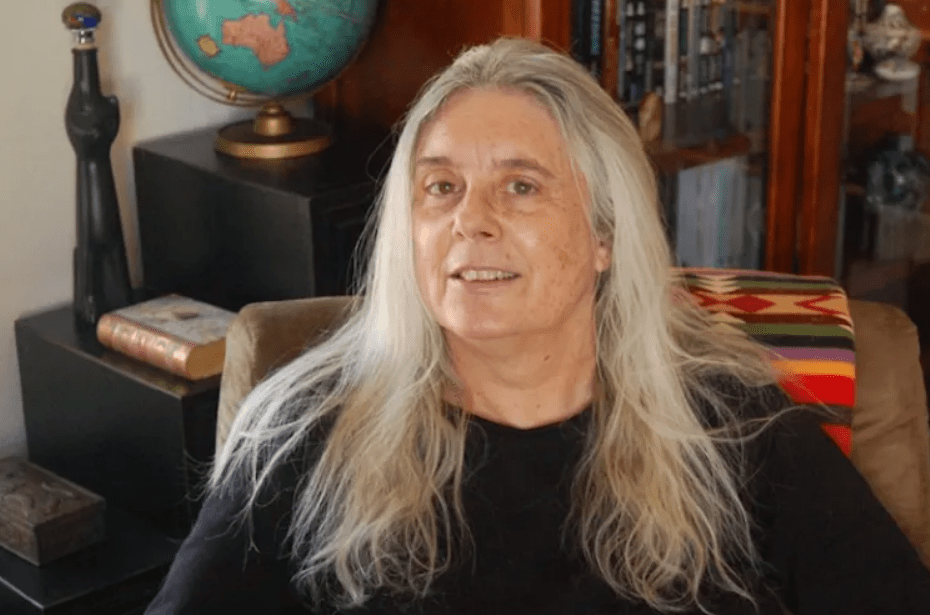
Jane Lindskold is the award-winning, New York Times best-selling author of over eighty short stories and more than thirty novels, including the eight-volume Firekeeper Saga (aka “The Wolf Books”), the two athanor novels (Changer and Changer’s Daughter), the three volumes of the Breaking the Wall series, the Artemis Awakening series, and many more. Lindskold has also written in collaboration with David Weber (Fire Season, Treecat Wars, A New Clan) and Roger Zelazny (Donnerjack and Lord Demon.
When she’s not writing or reading, she’s likely being ordered around by a variety of small animals. Lindskold lives in New Mexico with her husband, archeologist, Jim Moore.
 Celebrating CdL