An Artist Inspires
Moonheart was the first book of his that I came across, back in the mid-eighties. A friend of mine gave her copy to me, saying she had just finished it and suggested I might like it. I shall forever owe a debt of gratitude to Megan Mitchell for this generous act.
I read it and loved it. Gee, what a great story. I wish this guy would write something else.
In those days, I went to used bookstores to poke through the shelves and discover new reads. I found I did not want to wait for his work to cycle through to the pre-read merchants. I started buying his books new, when they came out, the only author whose stories I wouldn’t wait to stumble across secondhand. Fortunately for all of us, Charles wrote quite a few books over the years, and I enjoyed each one of them without fail.
In 2019 I noticed that Charles listed an email address on his book jacket. Looking at some of his other books, I realized he’d done that for some time, but it meant something different to me that week. I had something I wanted to share with him. I had written a story about the origins of Santa Claus. I kept polishing that little story and fooling around with it, trying to figure out whether or not it was any good.
This suddenly seemed like such an obvious thing to do that I thought, maybe I’ll write to Charles myself- he did give me his email address, after all, sort of… and ask him if he’d be willing to read it. I guessed his inbox was probably inundated with notes from people like me all the time, so I was mildly surprised and wholly thrilled when Charles soon replied with a short, gracious note. After some back and forth, he agreed to read my story, and, to my delight, he liked the idea. After that, he inexplicably agreed to read other things I had written, and he was always honest about whether a) he liked them, and b) whether they were worth reading, which isn’t always the same thing. A dialogue flowed between us; it was invaluable to someone like me as I began to learn the craft of writing.
Largely because of Charles’s encouragement, I began to write more flash fiction pieces, and posted some of them on his Mythic Café page. He enjoyed my slice-of-life material. Those same stories that irritated other readers, agents, and editors because of their fragmentary style frequently met with his approval. It was these flash pieces that led me to develop and bring to the page two recurring characters: an unnamed mother and her child.
“Your stories often raise more questions than they answer, but that’s fine with me,” Charles wrote to me once.
I thought about his statement concerning questions and answers for a day or so afterwards, because I always learn more than one thing from Charles’s comments. His stories are the reason that I’ve learned to enjoy finding questions to ask, and from his tales I’ve learned that I needn’t always provide the answers. My two characters keep pestering me as I write this; they say that their own comments about Charles and his work should be included in this essay, since they usually do the asking and the answering in my stead.
When I stopped by her townhouse for a nightcap one evening in 1986, Mother handed me a book along with a glass of champagne.
“Read this,” she said. “The man who wrote it has surprising insights into our world. You would think that he was one of us.”
For those readers who only know my mother through our occasionally public adventuring, this might sound out of character, but she is an inveterate reader, and I find her recommendations are almost always spot on. She doesn’t make them often, so I decided I would read this novel, Moonheart.
A month or so later, I had read the book through four or five times and was still enjoying it. As with many great stories, I was constantly finding new things within it, because with repetition the magic of the book began allowing me to slip down the secret paths that a casual reader would never know existed.
One evening I walked into my kitchen to find that my mother had materialized from wherever her latest travels landed her, and happily, she was mixing cocktails. Chartreuse and cognac were on the counter, and I could smell a Shepard’s Pie in the oven.
“Shall I make you a salad?” I asked. It’s a standing joke when we have dinner together, because my mother hates vegetables of all sorts unless they’re potatoes. And sometimes she doesn’t hate creamed spinach or grilled asparagus, but only when there’s company.
“No. Do you want your Champs-Elysses up or on the rocks?” Another joke, because I drink all my cocktails on ice, and she, of course, knows that.
“I’ll change things up and have mine on the rocks, please,” I said. She glanced at the book in my hand and smiled, asking a question with her eyes. I nodded in return, sharing the thought.
“This man—he knows a lot of the people we know, or he certainly seems to. I assumed, at first, that he was human.” Mother poured our respective drinks from the shaker, and I lifted mine from the counter, watching her smile. A light, knowing smile that might unsettle someone that did not know her, just enough of one to show the tips of long canines.
“Oh, he’s human,” she said. “I went by to see.”
“I think on the dust jacket it says that he lives in Ottawa.” She nodded. Mother rarely tells me when she goes traveling solo, and sometimes she disappears for weeks or months at a time if she finds someplace or something or someone interesting.
“Yes, he does. I went to a tavern and observed him, so I saw his partner MaryAnn. She’s his partner in all things, his muse, a true beauty and an inspiration. Lovely people. Talented musicians.” That meant she hadn’t engaged them in conversation. Mother values music over speech. “They saw me, dancing to their music, one night.” An entire chapter was left unsaid in that sentence, but I could imagine how it had been.
There are the moments when poets, bards, and artists can see us and take no harm from our company, when that single thread of melodic joy runs through and binds together every being present.
“They may not be like us,” I said, and I lifted my glass, making the book spin around on the counter so that it faced her. “But I think his book—”
“Books,” corrected Mother, “he has written more of them.”
“Good—it makes him, it makes them—as immortal as we are. This is a story that will live on, even after we have gone to do whatever it is we do in our next act.”
Mother smiled, a full smile this time. She regarded the dogeared copy of Moonheart, looked up to meet my eyes, and raised her glass in answer.
Charles’s generosity and kindness are evident in his life and his work. His stories make us more thoughtful. The characters and settings he creates have already withstood the test of time. I’ve just received an installment of his Gracie Willow story, so I’m going to have the wonderful treat of reading a new-to-me work of his as soon as I complete these next sentences. In his stories, the magic is always there.
Thank you for everything, Charles.
© Alan Allinger
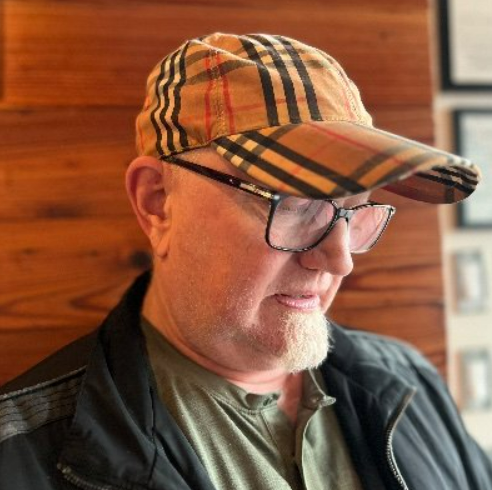
Alan Allinger debuted his first book in April of 2020. Though he has been telling stories his entire life, the medium has been different up to this point. His first love was theater, and has worked in the entertainment industry as a prop maker for nearly 40 years. From Oscar winners, to Sci-Fi hits, to shows from the Shondaland empire, chances are Alan’s work has shaped some of your favorite visual stories.
Alan has always been a voracious reader and was known to bring books even on dates, something his now-wife of 29 years squashed quickly. After a lifetime of absorbing literature, he began scribbling down his own. Rooted in his love of fantasy, his debut anthology of short stories is available now. Alan lives in Dallas, TX with his wife Mary and has three daughters: Nola, Ema and Jane. Since each daughter is lovelier than the next, he has never been able to play favorites.
 Celebrating CdL